

Not sure whether to use the WooCommerce Features and Variations or WooCommerce Product Options plugin?
In this post, we will explore Pros and Cons of Using Variations vs. Product Alternatives, then we’ll talk What Kinds of eCommerce Sites May Require a Plugin To make advanced product choices.
WooCommerce Variations vs Product Alternatives Including Pros and Cons
Offbeat, WooCommerce doesn’t support product options. If you want this feature on your 🛒 store, you’ll need a plugin.
For this reason, you will want to carefully consider whether you need the product options in the first place. To that end, let’s consider the pros and cons of both variations and WooCommerce product options.
Makeover
Variations are a key feature of WooCommerce that lets you create different versions of a product using product attributes.
This feature enables you to create different versions of the same item. For example, if you manage a clothing store, you may offer multiple sizes of the same product.
If you sell “brand t-shirts” products, you can add a “size” attribute with options for “small”, “medium”, and “large”. This will create three different products:
- brand t-shirts small
- Brand T-Shirt Medium
- brand t-shirts large
Each product will have its own price and SKU.
Let’s take a look at the full list of pros and cons of using Variations in WooCommerce.
Pros
- No additional plugin required (it’s included in WooCommerce)
- Automatically synchronizes product stock, hides sold-out variable items
- Creates a SKU for each convertible product
Cons
- You need to create ‘attributes’ for all relevant objects first
- Relies on manual process, so setting up each different variant can be time consuming
- Doesn’t allow visual customization unless you add another plugin like Variation Samples for WooCommerce (Variable products can only be shown in the drop-down menu by default)
- Limits front-end viewing to products with no more than 30 variations
- Too many variations can clog up your database
If you’re still deciding whether or not this feature will fit your store’s needs, check out our full guide to setting up WooCommerce Variations. That way, you can see exactly what’s in it.
Product Options
Product options let you collect additional information about a product based on customer input.
A common example would be customizable products.
For example, let’s say you sell pocket watches. You can add a product option that lets shoppers add their custom engraving to the back of the watch.
There is a built-in product, but buyers can customize it using product options. Each product option may also have an associated cost that is added to the base product price.
As we mentioned earlier, WooCommerce does not support product options in the core software. However, you can use dedicated product options plugins to get the exact customization features you’re looking for.
Let’s discuss the general pros and cons of using the advanced WooCommerce product options.
Pros
- Allows you to add multiple custom field options for variable items
- Lets you modify a product’s price based on customer input, including using calculated fields (such as charging by the number of letters in an engraving)
- Gives you more options for customizing the interface
- Won’t occupy as much database space as variations
Cons
- Sometimes product options are not synchronized with stock (although premium tools often do)
- The product will still normally only have one SKU – you can’t give each variation its own SKU (This may not be a bad thing, though – it depends on your needs.,
There are a lot of options available when it comes to plugins for WooCommerce product options. These can provide you with more advanced features and will enable you to customize and streamline your product management process.
When to Use a Plugin for WooCommerce Product Options
In general, when you need to control the stock of each variant, you will want to use the core product variants and attributes.
For example, if you have 10 small “brand T-shirts”, 7 medium “brand T-shirts”, and 6 large “brand T-shirts”, the product variations allow you to keep track of the stock position for each individual SKU. Gives
On the other hand, product alternatives are generally a better choice for more complex product configurations, especially customizable products.
While attributes and variations can work for very simple product configurations, product options give you a lot more flexibility.
This is especially true for any store that offers on-demand personalization, as it will typically require more than the simple dropdown menus that the variations allow:
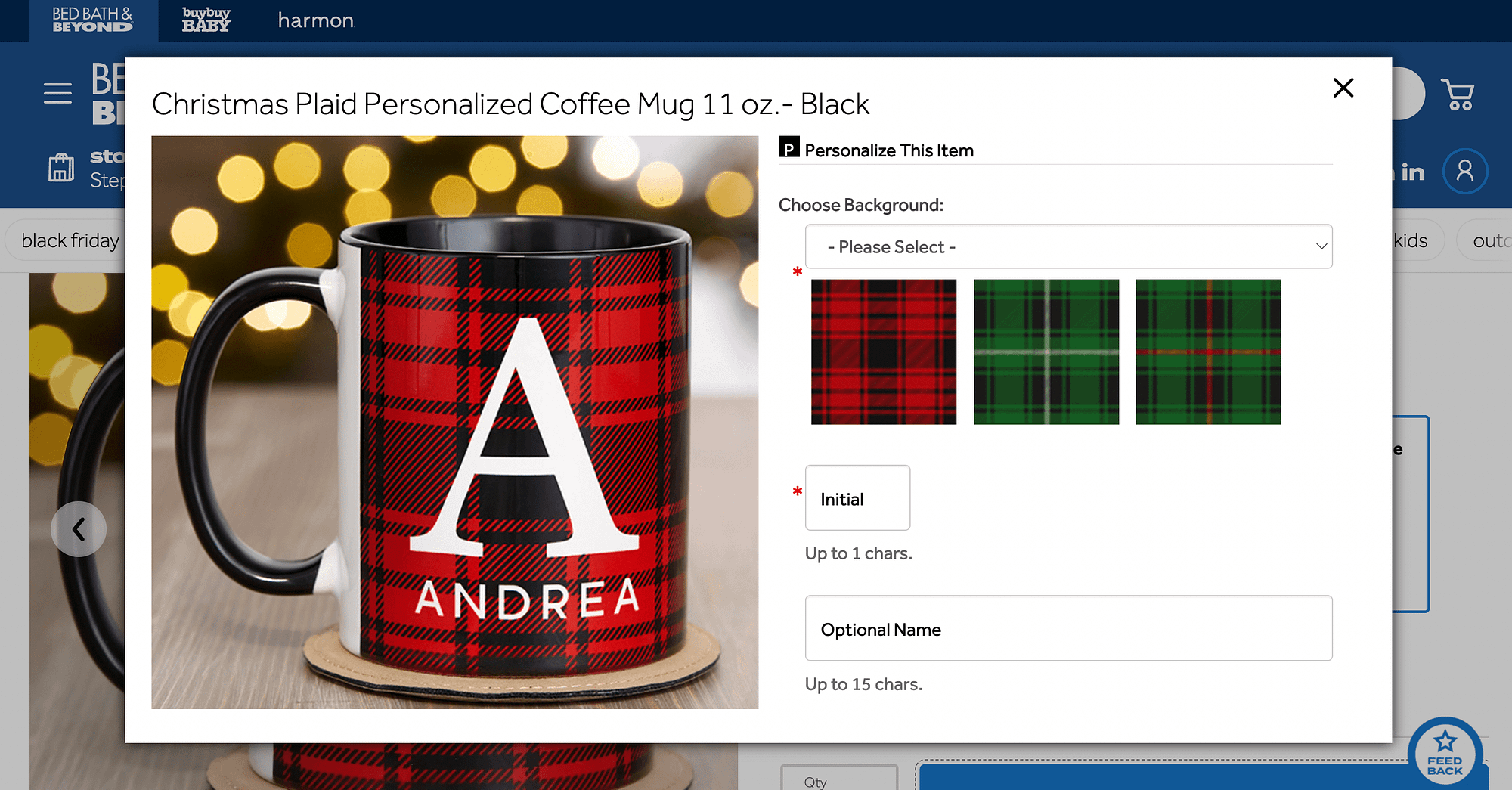
For example, if your shop makes custom mugs, you’ll need to include a field where customers can enter their desired text and any additional customizations.
Since each product is unique by definition, you don’t need a separate SKU for each product customization. You can have just one SKU for the underlying product – a blank white mug, for example – and then let shoppers add their own customizations on top of that using the product options.
If you choose to use the WooCommerce Product Options plugin, you’ll be able to manage large amounts of variable items more efficiently. Most tools enable you to save your favorite settings and offer more advanced bulk operations.
Plus, most plugins for product options offer additional options when it comes to customizing your product pages. For example, you can use a plugin that lets you create a pop-up, as shown in the example above.
How to use Product Addons and Fields for WooCommerce (PPOM) plugin
If you want to use product options, you’ll need the help of a dedicated WooCommerce product options plugin.
There are many tools that can help you create WooCommerce product options. In this tutorial, we will be using Product Addons & Fields for WooCommerce (PPOM).
This plugin lets you add custom fields and add-ons to your product pages. Plus, it comes with a drag-and-drop form builder, which makes it super easy to customize your product options.
Before getting started, make sure you have installed and activated the plugin on your WordPress site.
Step 1: Set up your meta group
The PPOM plugin allows you to create ‘meta groups’ that you can apply to a single item. This way, you will be able to make product choices faster.
To do this, go to WooCommerce > PPOM Field and click add new group, In General tab, you need to give a name to your meta group. We’ll name ours “Hoodies”:
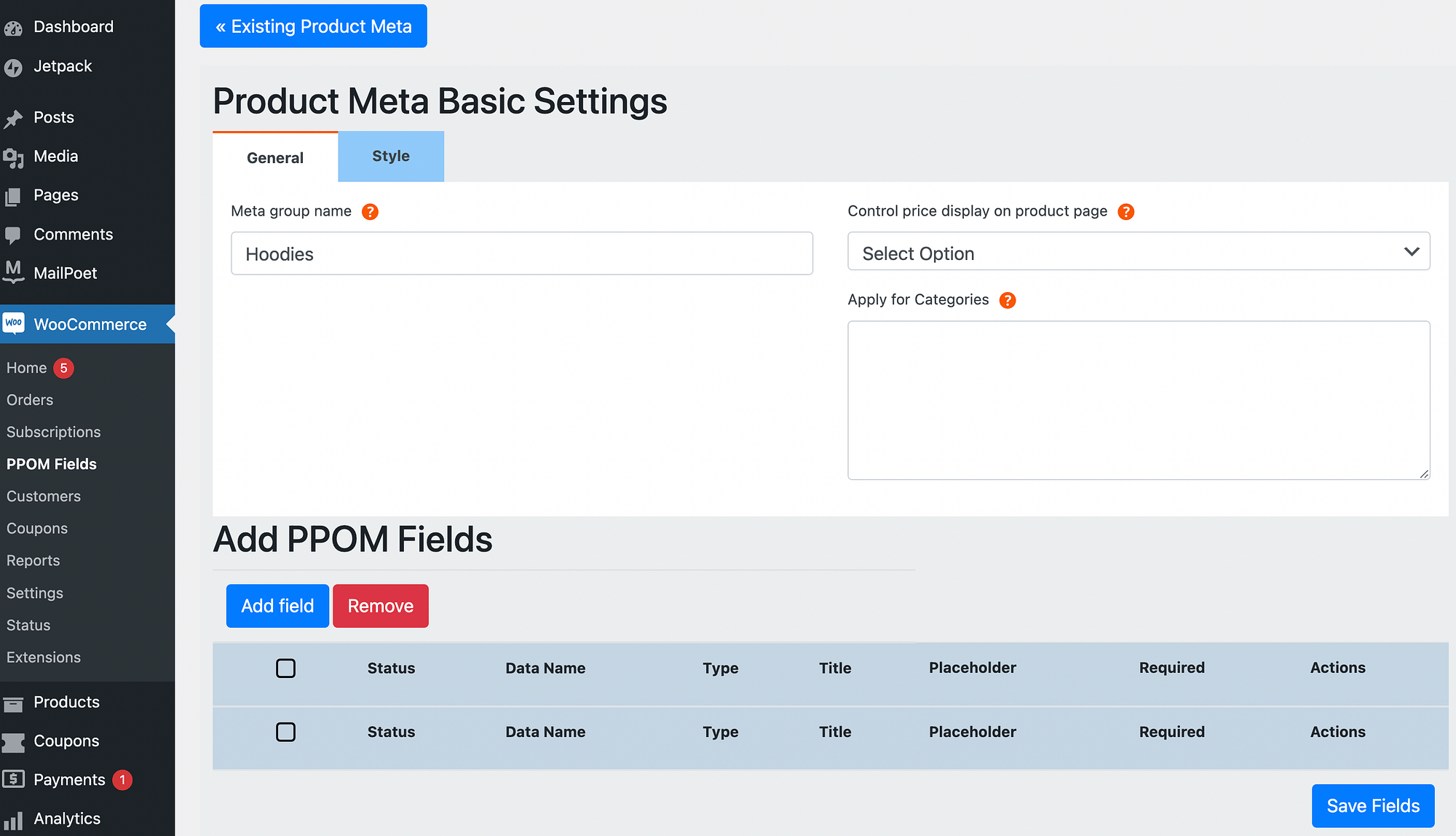
Then, use the dropdown menu to choose how prices are displayed on the front end:
You can also configure your group to apply against categories. below Style In the tab, you have the option of adding custom CSS or JavaScript.
When you’re happy with your selections, you can move on to the next step.
Step 2: Add Your Regions
Now you can add the fields that will make up your product options. To get started, click on the blue Add field switch:
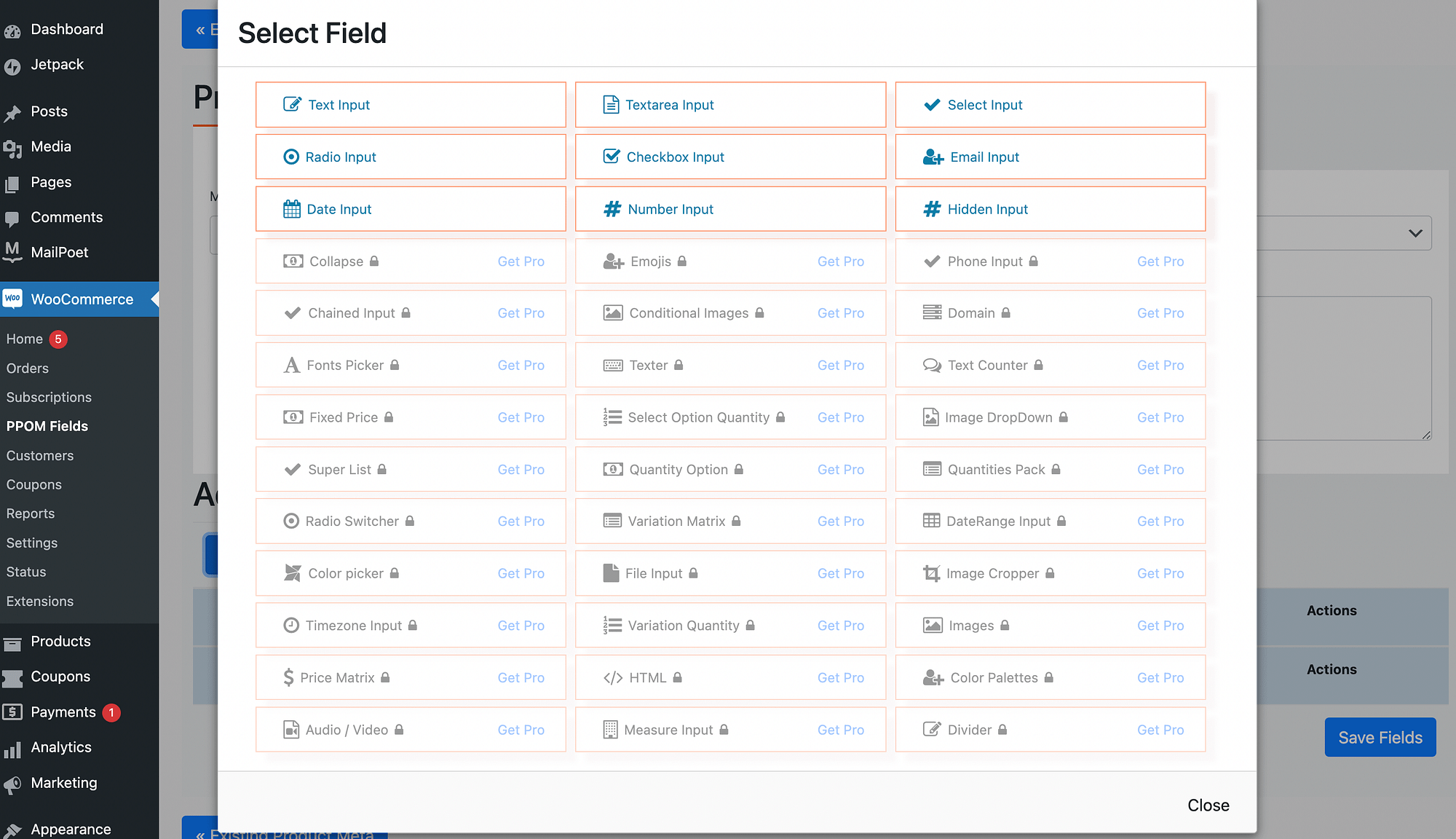
As you can see, you get nine different field options with the free plugin. However, if you upgrade to the Pro plan, you’ll get more than 30. These options include advanced options such as font pickers, images, price metrics, and more.
we’ll go ahead and pick text input Farm:
When you’re finished, click Add field After save the fields,
Step 3: Update your product
navigate to the end Products > All Products and locate the item to which you want to add a meta group:
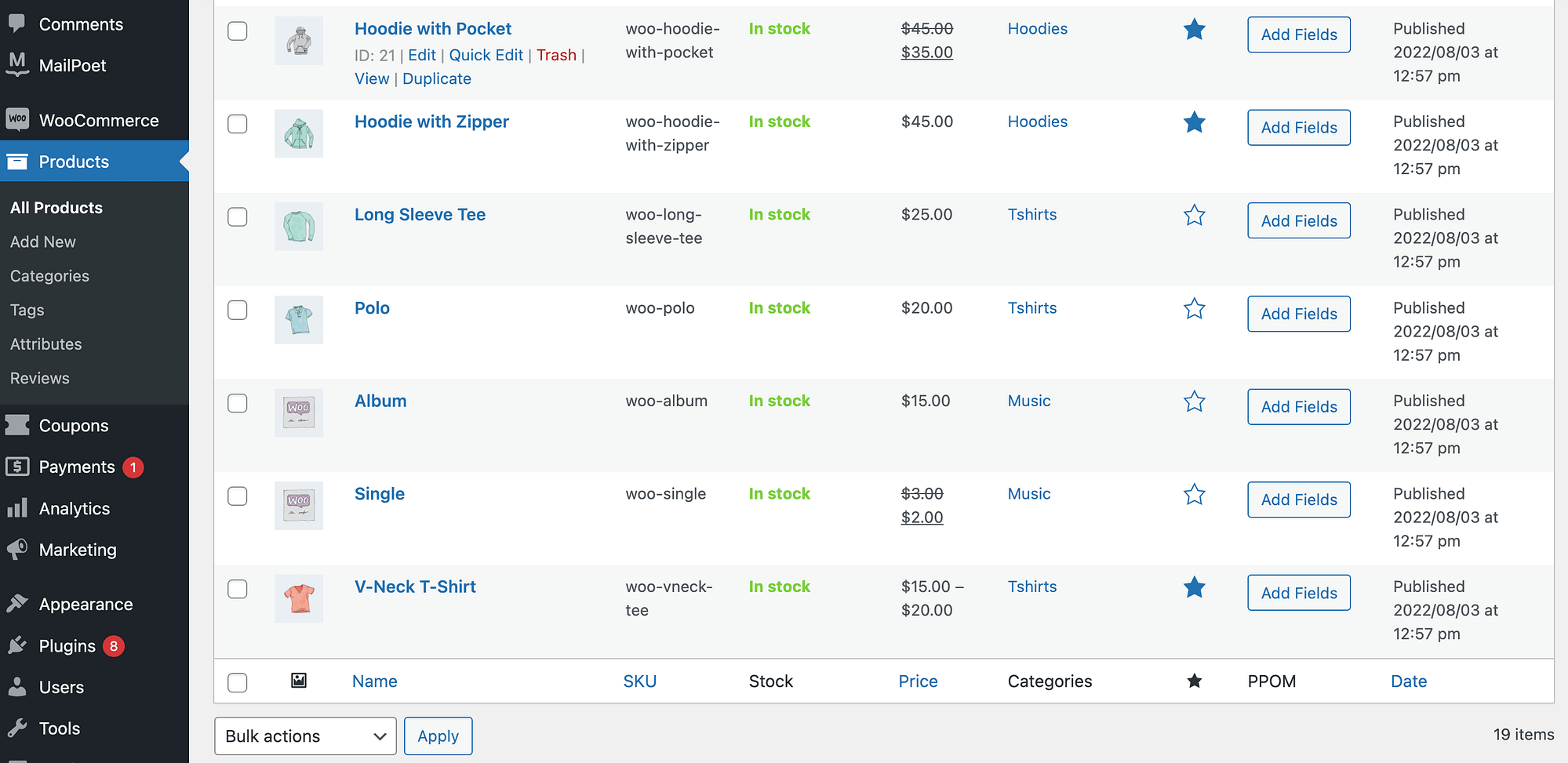
Click Next edit scroll down further product data Panel. click here PPOM Fields And select the group that you created in the previous step:
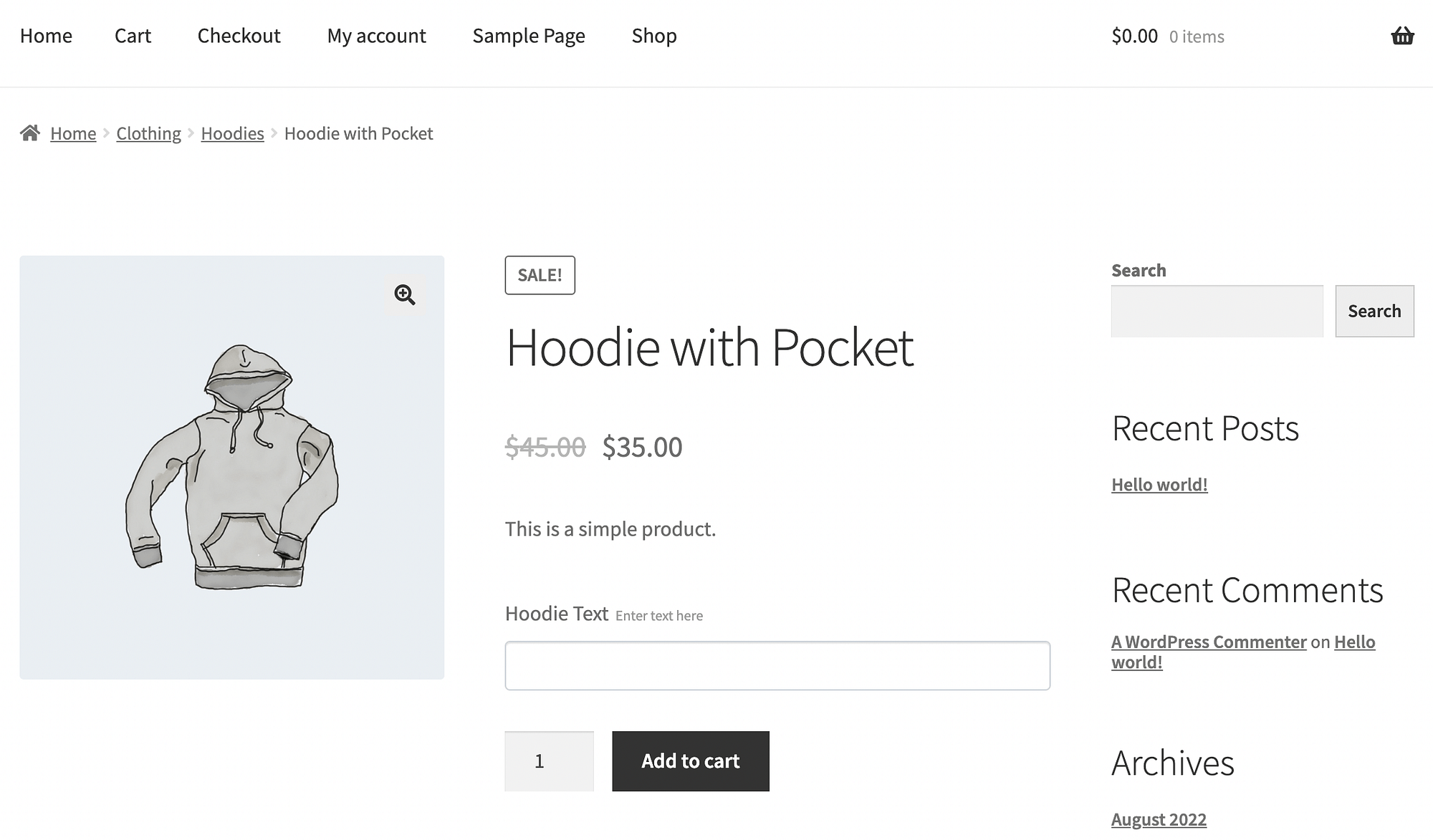
As you can see, the PPOM plugin is very intuitive and straight forward. While the above design is very basic, you can unlock a number of additional customization options (for both on the field and appearance) with the Pro plan.
Conclusion
Deciding whether or not your online store could benefit from advanced WooCommerce product options can be difficult. In the end, it really depends on how you manage your products and what options you want to offer customers.
Simple stores can probably stick with the basic variations of WooCommerce, especially if you want the ability to manage stock for each variation separately.
However, shops selling more customizable items will need to use a plugin to enable product options. Product options can also generally be more convenient to use if stock management isn’t as important to you.
If you want to use product variations, check out our guide to 👉 WooCommerce Variations.
If you want to access product options, Product Addons and Fields for WooCommerce (PPOM) Enables you to add custom fields and additional options to your product pages.
