
Struggling with how to free up WordPress disk space to avoid hitting your host’s limits?
For most WordPress sites, finding ways to optimize your images and other media provides the fastest and best ROI for freeing up WordPress disk space, but there are a few other areas you may want to consider.
In this post, you will be the first to know How to check your current WordPress disk space To understand how much data your site is consuming.
How to check your current WordPress disk space allocation
There are a few ways you can check your current WordPress disk space allocation. Often, your hosting control panel will show this on your dashboard:
Of course, you can also ask your host directly. If you do this, you can also ask follow-up questions to see what eats up your resources and what you can spare.
However, the fastest way to check your WordPress disk space is to site health equipment within WordPress. you will find it on Tools > Site Health link, and Info > Directories and Sizes The tab will give you the details of resource allocation:
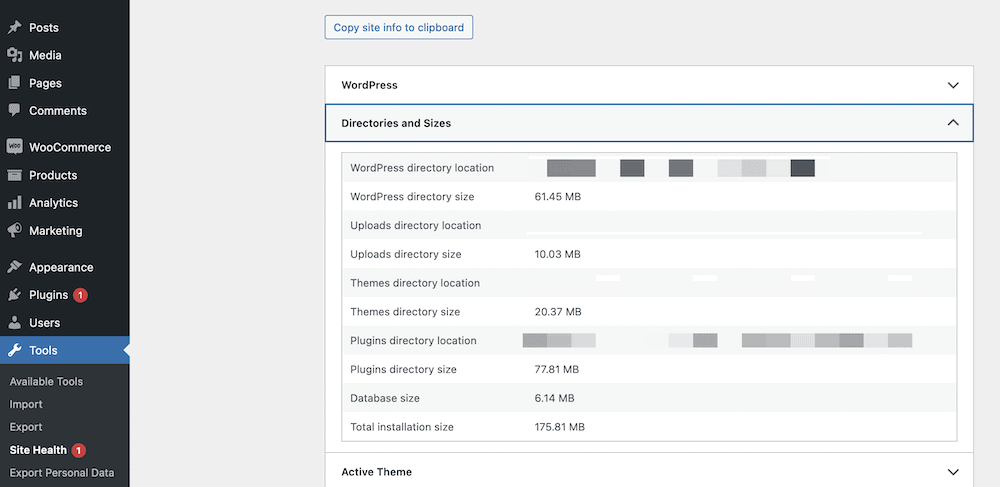
From here, you can compare this to your known hosting disk allocation, and create a plan of action to reduce your disk usage.
How to free up WordPress disk space with image optimization
In this section, we will look at four of the most effective ways to save some WordPress disk space by optimizing your images. They are in no order, so read them all and try each of them to see what is most optimal for your needs!
- remove unused images
- Use smaller image sizes for your site
- Use external hosting for large files (including Optimol)
- Optimize your images using online tools
1. Remove unused images
Here’s a method that’s the equivalent of taking a hammer to a watermelon: Delete images you don’t use. You don’t want clutter, so if you remove those images in their entirety, you’ll save some WordPress disk space (potentially a lot).
Comment – Before deleting any images, we recommend that you back up your site and store it in an off-site location.
To do this, go to Media > Library Screens within WordPress:
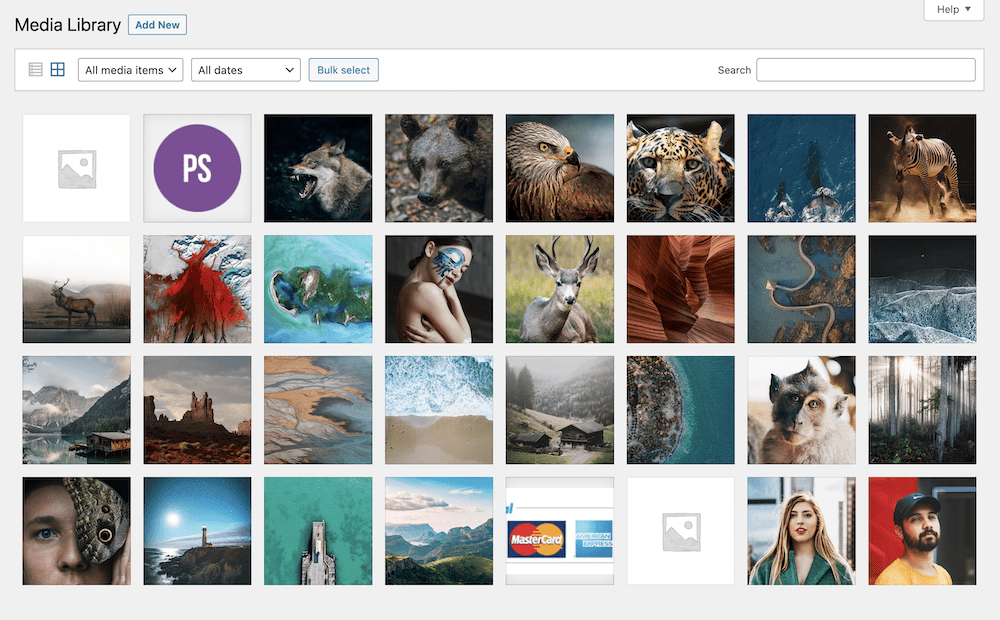
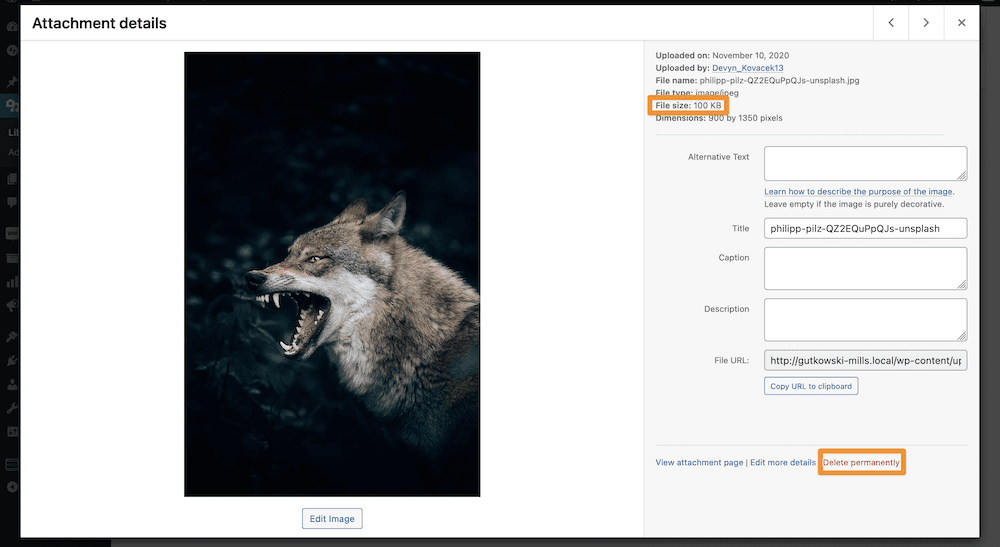
If you click on an image, you can check the file size and delete the image using the links at the bottom of the screen:
However, if you want to delete multiple images at once, you can use the bulk selection button on the main media library Screen:
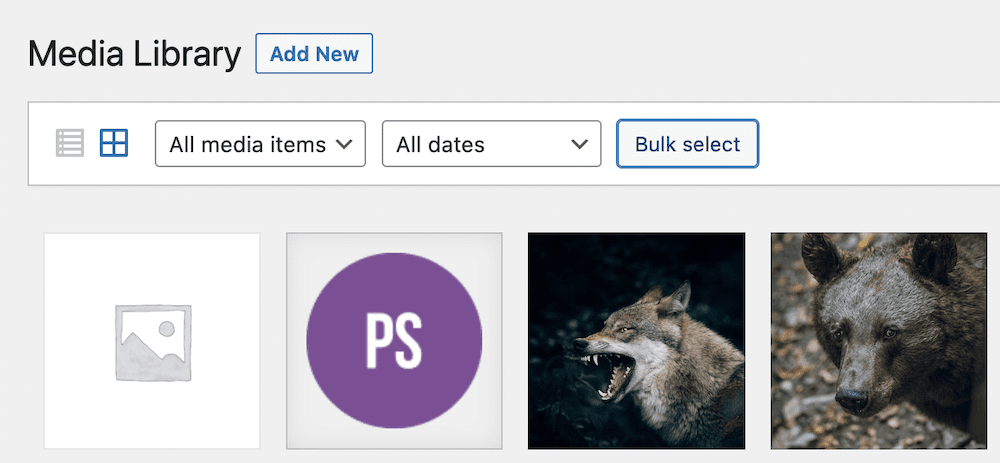
Once you click it, you can select images, then use Delete Permanently button to get rid of them.
To help you quickly find the images you want to delete, you can change all media items to drop-down independent which will let you filter out only images that are not attached to a post.
However, just because an image is unattached doesn’t mean you can delete it, so you may still want to check these images out before clicking the Delete button.
2. Use Smaller Image Sizes for Your Site
In general, smaller images mean smaller file sizes – although you need to make sure you serve images scaled down for the highest quality possible. There are lots of ways to do this, but your operating system (OS) may have everything you need.
For example, on macOS, Preview There is a way to change the dimensions through the app Tools > Adjust Size Menu Options:
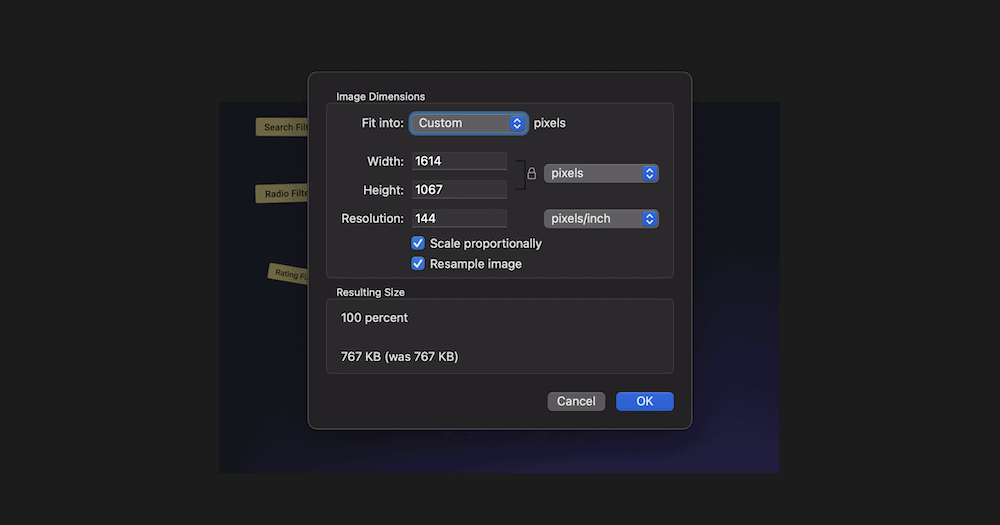
From here, you can save your changes and upload the reduced-size images to WordPress. You can also find these types of tools online.
3. Use external hosting for large files (including Optimol)
We started with the sledgehammer method, and this option is just as straightforward but more sophisticated. Although optimization is important, moving your media files to external storage will bring you immense benefits.
While there are many WordPress plugins and services available, optimal The most straightforward is:
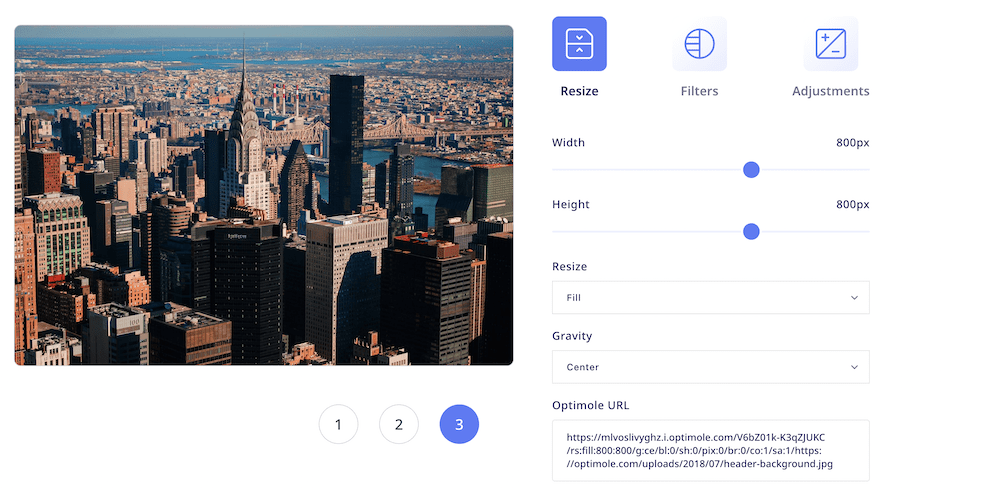
As a customization tool, it beats out most of the competition. For our purposes, you can also resize and compress the images:
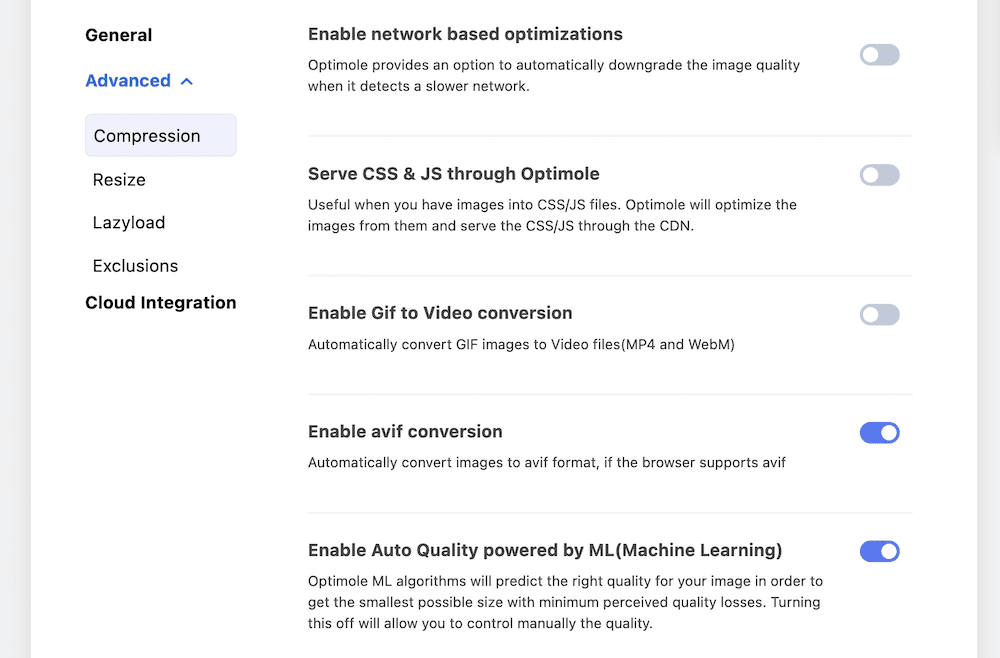
Even better, Optimole lets you load images to a third-party storage and Amazon Cloudfront CDN,
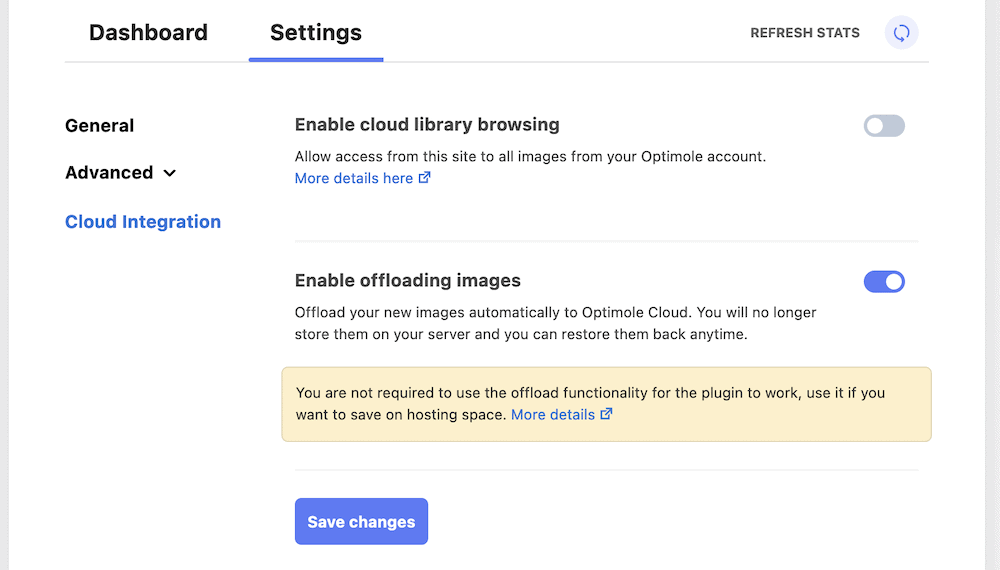
The best part is that Optimol does have a free tier, though premium plans give you much more than just the main features.
4. Optimize Your Images Using Online Tools
Speaking of which, whether you want to save WordPress disk space or not, online image optimization is a great idea. You’ll find plenty of options available, and many even have free upload allocation tiers, Tiny PNG To be our favorite
There are also a number of WordPress image optimization plugins. You can see a great comparison of the top such tools we have done here. Overall, there are lots of solutions that may suit your needs, and we encourage you to look at as many as you can to find one. Still, if you use Optimole, you’ll already have image optimization available to you. This means you won’t need a third-party service to further optimize your images.
Some quick ways to recover small amounts of WordPress disk space
If you’ve already done the four methods we’ve mentioned, you might want to look into “marginal gains”. There are a few ways you can claim a smaller amount of WordPress disk space that can help you keep your disk allocation in good stead.
Delete old backup
These can take up space, and the likely reality is that you probably won’t need a backup older than about a month. If you delete them, you can reclaim some precious megabytes. Better yet, you should store your backups on off-site storage such as Amazon S3 or Google Drive. Not only does this free up WordPress disk space, but it also makes your backups more robust and secure.
Remove old themes and plugins
Not only is this a way to optimize your disk space, but it’s also good site security. You should get rid of any themes or plugins that you do not use and keep your WordPress installation clean.
Consider the size of your video files
When you consider image optimization, don’t forget video as well. These files can be very large, and as web technology advances, more websites offer them.
However, despite this, there are not many tools to help you reduce the size of your videos. At least, not with the same frequency as image optimization. Instead, you’ll often need to make sure you render the video with the correct settings to keep the file size down.
In fact, one of the best ways to conserve your WordPress disk space is to offload. Any media on your site to an external content delivery network (CDN) or dedicated video service.
Many site owners will also understand that comments, drafts, and other on-site elements take up WordPress disk space. However, this is not always true. In our final section, we’ll see why this is so.
Why purging your database may not save WordPress disk space
There are many other elements of your site that need to live somewhere. Take your draft posts and pages, or comment section entries, for example.
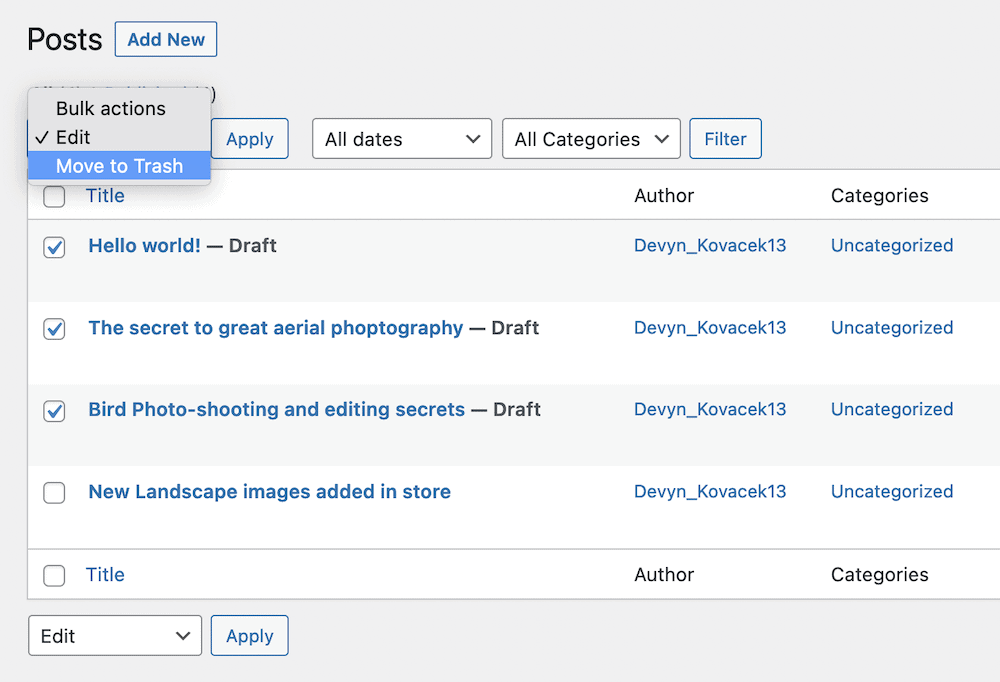
However, they will not have any WordPress disk space under specific circumstances. This is because each of these on-site elements resides in a database.
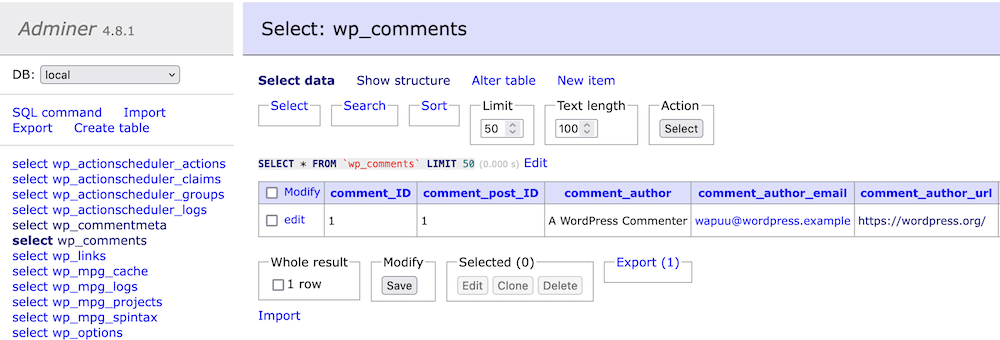
Instead, many hosting providers will not factor database size into your disk space allocation. Therefore, optimizing and pruning your database will make no difference to your available resources.
Conclusion
Media is important to almost every modern website, so your site is likely going to have a lot of images, videos, and graphics.
However, you can reduce the size of almost all of these using Image Optimizer. While our favorite way to cut down on file size is to offload images with a tool like Optimal you can also get WordPress disk space back by using other online tools and by deleting images completely.
